


Types of Industrial Heating Elements: A Complete Guide
Discover the main types of industrial heating elements — tubular, cartridge, ceramic, immersion, and band heaters — and learn which one fits your application.
Introduction
Heating elements are the core of countless industrial processes — from plastic injection molding and food processing to chemical reactors and laboratory equipment. Choosing the wrong type can lead to premature failure, uneven heat distribution, and costly downtime. This guide covers the most common types of industrial heating elements, how they work, and when to use each one.
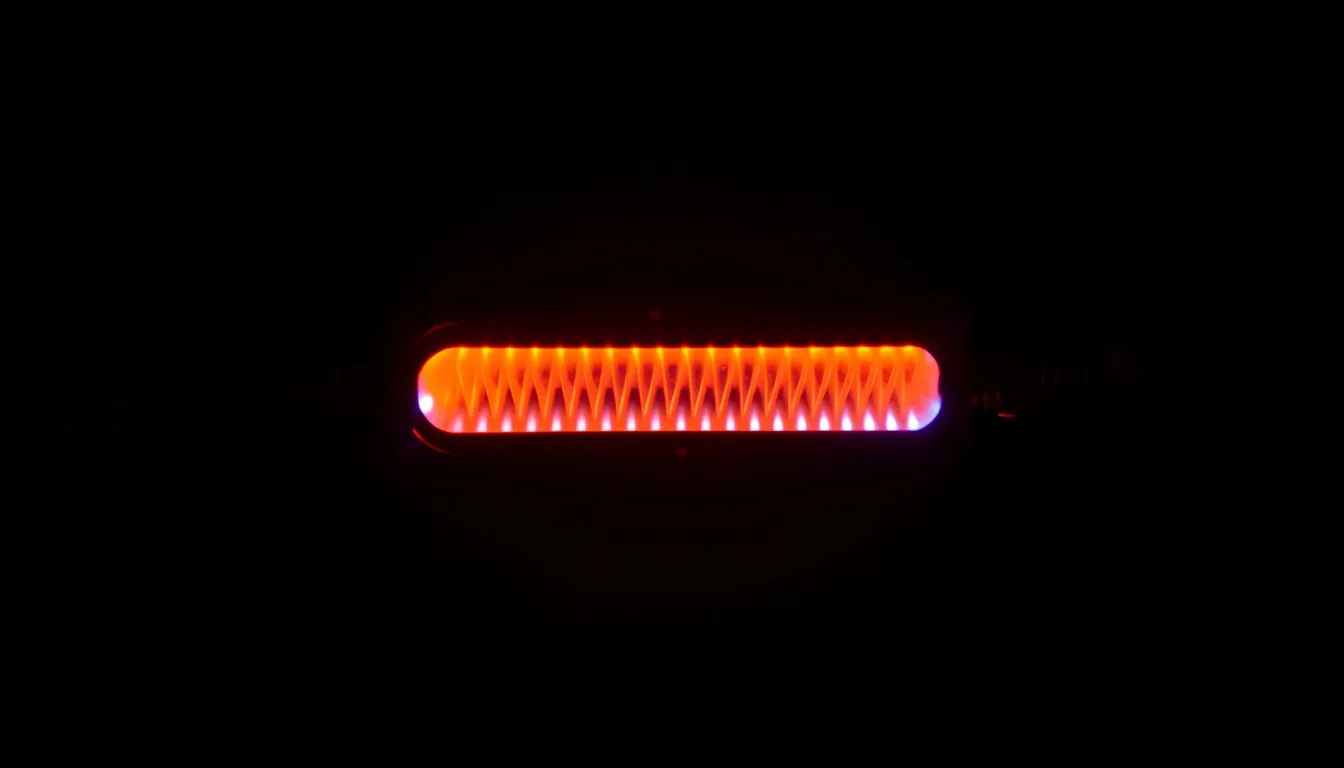
1. Tubular Heating Elements
Tubular elements are the most versatile and widely used type in industry. They consist of a resistance wire (typically nichrome or iron-chromium-aluminum alloy) coiled inside a metallic tube, with magnesium oxide powder packed tightly around the wire as electrical insulation and thermal conductor.
Key characteristics:
- Operating temperatures up to 1,200 °C (depending on sheath material)
- Sheath materials: stainless steel, Incoloy, copper, titanium, quartz
- Shapes: straight, U-shaped, hairpin, coiled, or custom-bent
Typical applications:
- Air duct heaters (HVAC and industrial dryers)
- Mold heating in plastics and rubber processing
- Ovens and furnaces
- Water and oil heating tanks
When to choose tubular elements: when you need a robust, customizable heater that can be formed to fit a specific shape or embedded directly into a metal block.
2. Cartridge Heaters
Cartridge heaters are cylindrical, precision-machined elements designed to be inserted into drilled holes in metal tooling, platens, or dies. They deliver high watt density in a compact form factor.
Key characteristics:
- Diameters typically from 6 mm to 25 mm
- Watt densities up to 40 W/cm² in high-density versions
- Tight-fit installation maximizes heat transfer and minimizes element temperature
Typical applications:
- Injection molds and die casting
- Packaging machinery (heat sealing bars)
- 3D printing hot ends
- Medical and laboratory instruments
When to choose cartridge heaters: when precise, localized heating of a metal component is required and space is limited. Always match the cartridge diameter closely to the hole bore — air gaps dramatically reduce efficiency and shorten service life.
3. Ceramic and Infrared Heating Elements
Ceramic elements radiate heat as infrared energy rather than relying on conduction or convection. They are commonly made from silicon carbide (SiC) or molybdenum disilicide (MoSi₂).
Key characteristics:
- SiC elements operate up to 1,600 °C; MoSi₂ elements up to 1,800 °C
- Fast thermal response — reach operating temperature in seconds
- Emit medium- to far-infrared radiation
Typical applications:
- Glass tempering and annealing furnaces
- Semiconductor wafer processing
- Ceramic and pottery kilns
- Powder coating curing ovens
When to choose ceramic/infrared elements: when very high temperatures are required, or when contactless surface heating is preferred (e.g., curing coatings on conveyor lines).
4. Immersion Heaters
Immersion heaters are designed to be submerged directly in the liquid or gas they are heating. They are essentially a tubular or flanged assembly inserted through the wall of a tank, vessel, or pipe.
Key characteristics:
- Available as screw-plug, flange-mount, or over-the-side configurations
- Sheath material must be compatible with the fluid (water, oil, acids, salts)
- Watt density must be matched to the fluid to avoid localized boiling or degradation
Typical applications:
- Water heating tanks and boilers
- Oil and fuel preheating
- Chemical process vessels
- Electroplating baths
When to choose immersion heaters: when heating a liquid medium is the primary requirement. Calculate the required watt density carefully — too high a density in viscous or sensitive fluids causes coking, scaling, or chemical breakdown at the element surface.
5. Band and Strip Heaters
Band heaters clamp around cylindrical surfaces such as barrels, pipes, nozzles, and extrusion screws. Strip heaters are flat and attach to flat surfaces with mounting hardware.
Key characteristics:
- Mica insulated (lower temperatures, up to ~500 °C) or ceramic insulated (up to ~750 °C)
- Easy installation and replacement without dismantling equipment
- Available with thermocouples integrated directly into the band
Typical applications:
- Plastic extruder and injection molding barrel heating
- Pipe and valve frost protection
- Drum and container heating
- Nozzle and hot runner heating
When to choose band/strip heaters: when surface heating of existing equipment is needed without machining holes or modifying the component.
How to Select the Right Heating Element
Use the following criteria as a decision framework:
| Factor | What to consider |
|---|---|
| Temperature range | Does the element material and insulation support the required process temperature? |
| Medium | Air, liquid, or surface contact? Each type has preferred element geometries. |
| Watt density | Match to the thermal conductivity of the medium; excessive density causes premature failure. |
| Sheath / material compatibility | Chemical resistance to the process fluid or atmosphere is critical. |
| Geometry constraints | Available space, mounting method, and the shape of the heated surface. |
| Control requirements | Fast thermal response (ceramic/IR) vs. thermal mass (tubular, immersion). |
Conclusion
There is no universal “best” heating element — the right choice depends on process temperature, the medium being heated, available space, and required watt density. Tubular elements offer the widest flexibility; cartridge heaters excel in precision tooling; ceramic elements handle the highest temperatures; immersion heaters are the most direct approach for liquids; and band heaters provide convenient surface heating.
When in doubt, consult the element manufacturer with your process parameters — temperature, wattage, fluid type, duty cycle, and available space — to ensure a solution that delivers the expected service life.
Related Articles
Industrial Heating Elements: Types, Selection, and Applications
A complete technical guide to industrial heating elements — covering element types, materials, watt density, installation methods, and how to select the right solution for your process.
Temperature Sensors for Heating Elements: Thermocouples vs. PT100/RTD
Learn how to choose the right temperature sensor for your heating element system — comparing thermocouples and PT100/RTD sensors across accuracy, range, response time, and industrial application.